


-
Galilei Science Park
Buy tickets 3€ cheaper in advanceThe exhibition is open until 27.9.2026
During the summer season, Heureka's exhibition offerings continue right into the backyard! Galilei Science Park features large-scale exhibits based on music, mathematics and physics, many of which involve water.On this page you will find information about the outdoor exhibition and the best tips for a successful visit to the exhibition.
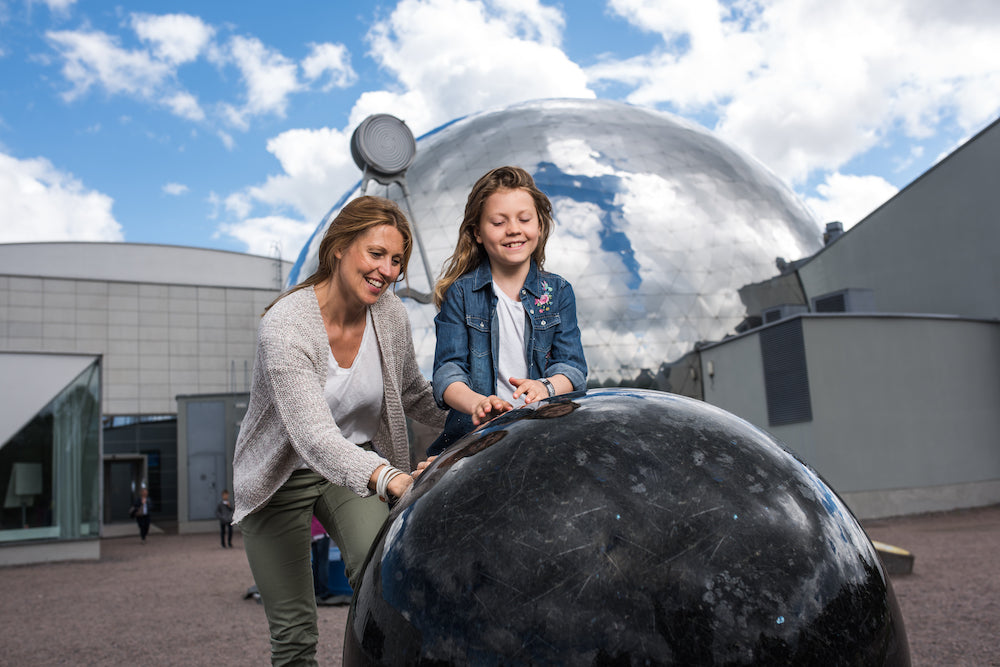
Science themes continue outside during the summer
Admission to the Galilei Science Park is included in the price of the Heureka ticket during the summer. The park offers many different attractions, such as:
- A large xylophone that you can use to play your favorite songs.
- A wheelchair track where you can test how well you can move in a wheelchair through different levels, doors and thresholds.
- A human yo-yo where you can try being a yo-yo and flying high in the air.
Tips for outdoor exhibitions
-

Pack a change of clothes
Especially on hot days, the fun water features at Galilei Science Park encourage play, which can lead to getting wet. So packing a change of clothes is a good idea!
-

Eat in beautiful scenery
The Science Restaurant's kiosk is located in the park, which serves coffee, refreshments, ice cream and snack pizza.


In front of Heureka
-
Penrose tiling
In front of Heureka's main entrance is a round tiled area where the so-called Penrose tiles. Penrose tiles are a way to cover a plane continuously with a small number of different polygons. They got their name in the 1970s after the mathematician Roger Penrose.
-
Stone park
Kivipuisto's 124 stones represent Finland's bedrock. The stones have been placed in the area by province, from Ordovician limestone imported from Åland all the way to gold ore from Kittilä. In addition to boulders, there is a piece of post-glacial beach pebbles from Vantaa. The boulders have been obtained as donations from entrepreneurs in the stone industry, the Geological Research Center, mining companies and some municipalities.